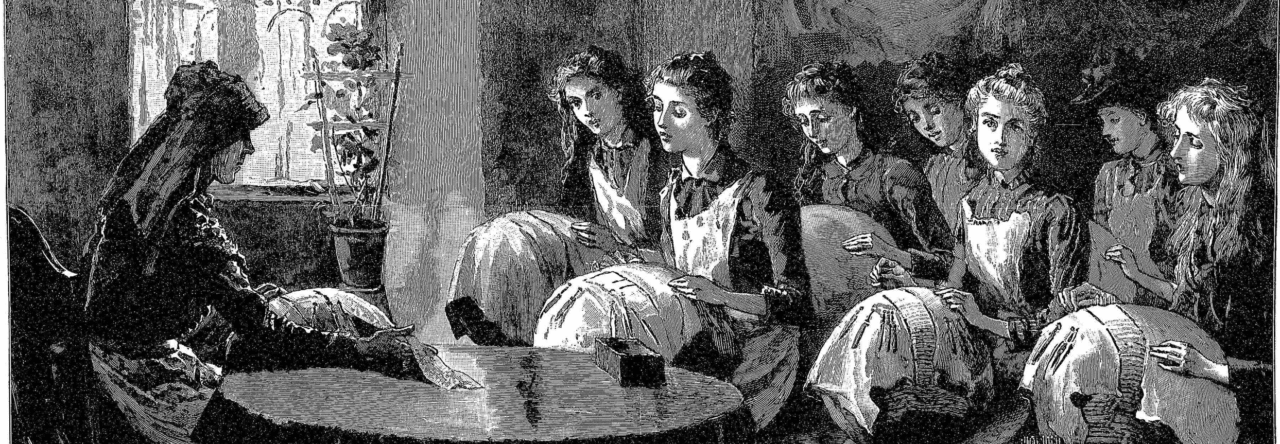
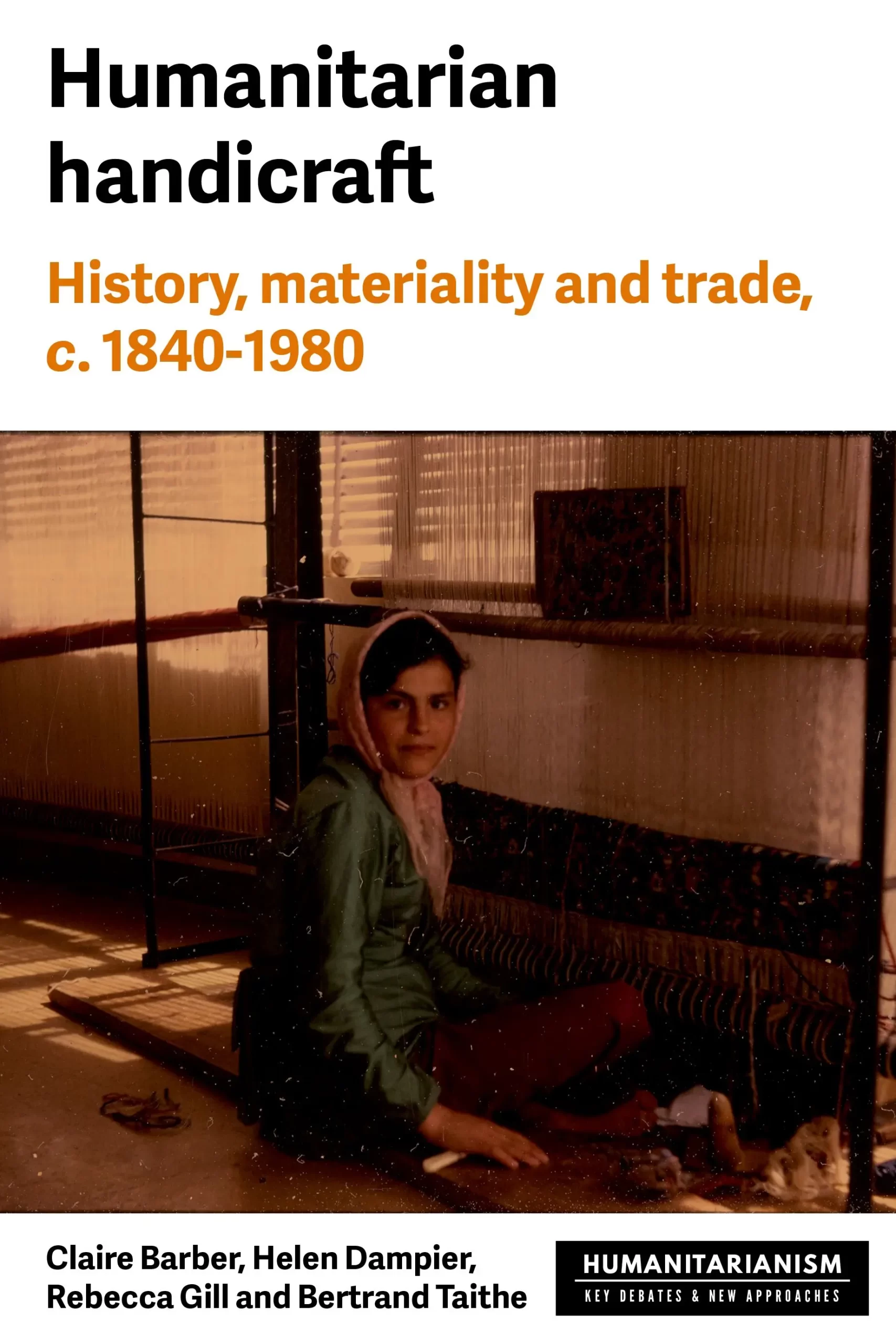
30 April 2026 sees the launch in Leeds of a new book – Humanitarian Handicraft: History, Materiality and Trade, c. 1840-1980 (Manchester University Press, 2025). If you’d like to attend, details are on eventbrite here. The editors – Claire Barber, Helen Dampier, Rebecca Gill and Bertrand Taithe – argue that hand-crafted textiles are an important part of humanitarian aesthetics, ethics and campaigning. We are all familiar with ‘fair trade’ shops which celebrate the skills, creativity and authenticity of (mostly) female artisans. This kind of activity has a long history, and as the contributions to this volume explain, that history has a lot to do with lace.
The book has chapters from the convenors of this site, David Hopkin and Nicolette Makovicky – on literary encouragements to lace revivals and cottage industry in Communist Poland respectively, as well as from our occasional contributor Wendy Wiertz, expanding on the theme of Belgian war lace. But it also has chapters from Janice Helland on philanthropic encouragement to Home Arts and Industries in Britain and Ireland, Helen Dampier and Rebecca Gill on Emily Hobhouse’s attempt to reintegrate Afrikaans women and children after the horrors of Boer War concentration camps through the Koppies Lace School, and Elizaveta Berezina on Russian social activism and the organisation of the Vologda lacemakers.
Some of the academic books we’ve covered on this website are very expensive or difficult to access, but Humanitarian Handicraft is available for free as an ‘Open Access’ publication, just follow this link. Or for individual chapters, click on the links in the table of contents, reproduced below.
TABLE OF CONTENTS: Humanitarian Handicraft: History, Materiality and Trade, c. 1840-1980 (Manchester University Press, 2025
Work of hands: humanitarian craft and fair trade in Britain and Ireland, 1885–1914 – Janice Helland
Emily Hobhouse and the Koppies Lace School, 1908–1926 – Helen Dampier and Rebecca Gill
Caught in the net: cooperation of lacemakers in the Vologda region, 1880s–1930s – Elizaveta Berezina
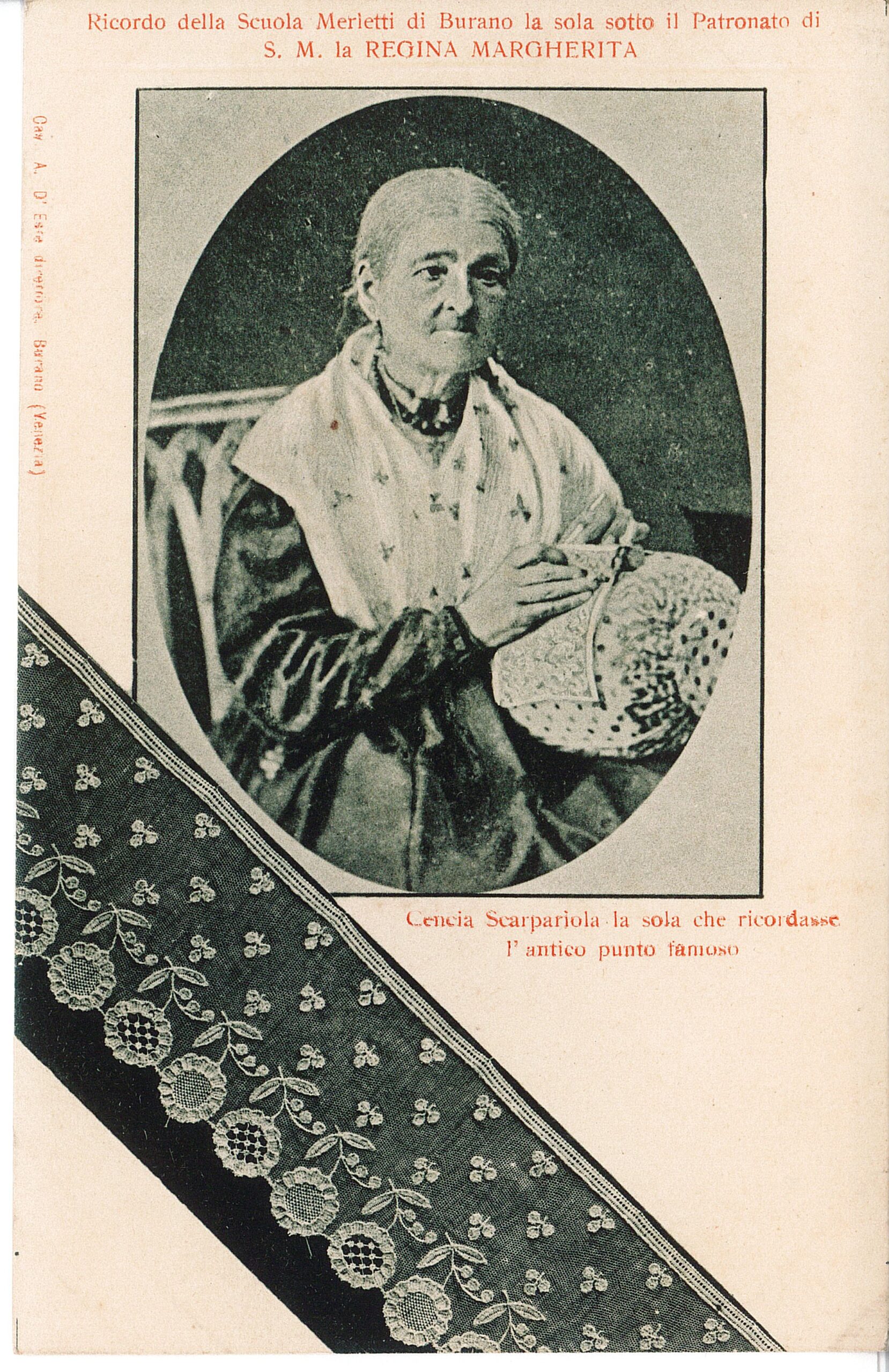
Postcard advertising the Burano lace school. Cencia Scarpariola was the last practitioner of Burano lace before the industry was revived, under the patronage of Queen Margaret of Savoy and others, in 1872: a famous example of philanthropic intervention in the craft textile market.